
Home›Guides›The Mosman Council cleanup
The Mosman Council cleanup, plainly
Sometimes the answer is the free service, and we say so.Mosman Council runs a free household cleanup, and it is a good service. Here is what it takes, how the dates and limits work, and exactly where a booked pickup fills the gap, so you can decide whether your job needs us at all.
Two collections a year, from the kerb
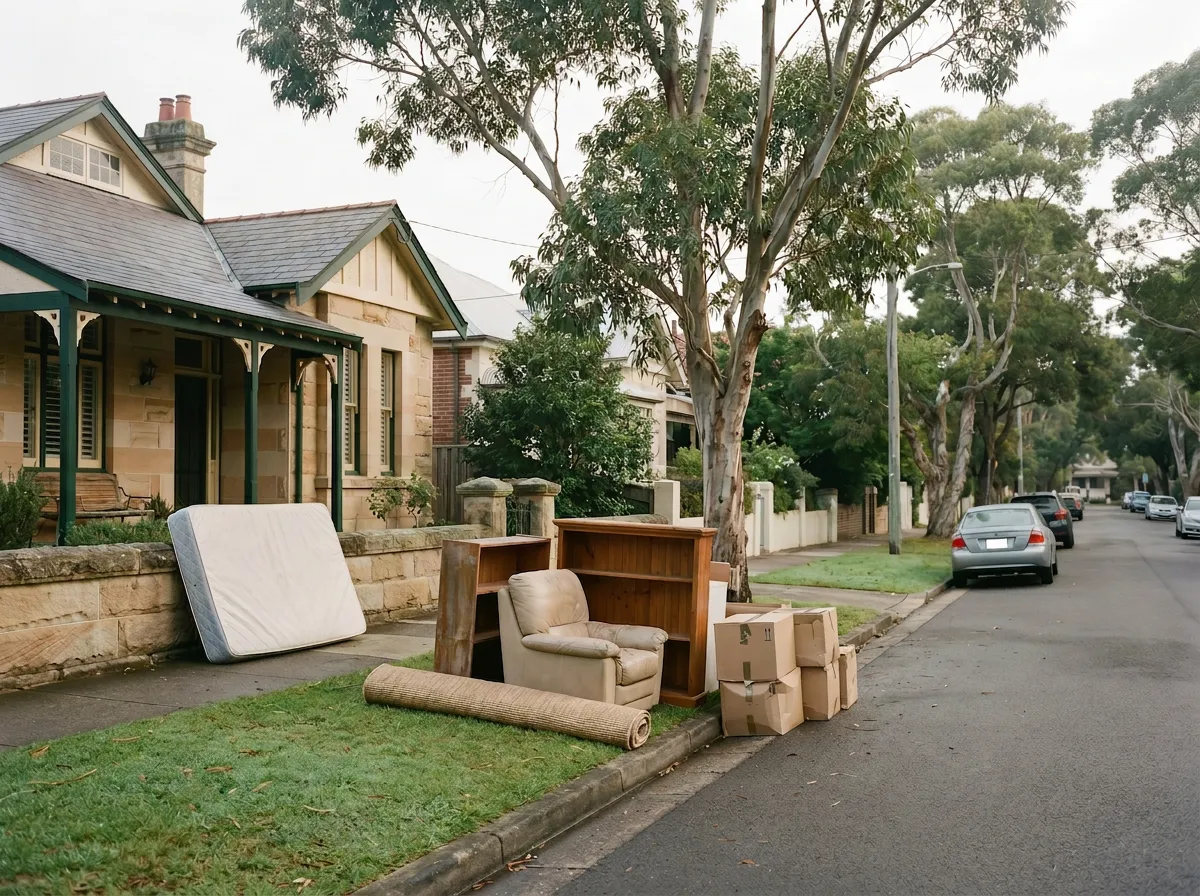
Every Mosman property gets a free household cleanup twice a year, on dates the council sets for your address. There is nothing to book for those: check your dates, put the pile out the night before, and the truck comes. If you need more, the council also offers extra pre-paid collections, arranged through its Waste Line with at least two working days' notice, up to four per property each year.
The rules are the same either way: up to five cubic metres per collection, nothing heavier than 30 kilograms, nothing longer than 1.5 metres on any side, and everything at the kerb in front of your own property, clear of the footpath and driveway. Mattresses lean beside the pile rather than on it; they are collected separately and recycled, free, which is honestly hard to beat.
Everything on this page is checked against the council's own household clean up page at mosman.nsw.gov.au (last checked July 2026). Rules change: if this page and theirs ever disagree, trust theirs, then tell us.
The service at a glance
| How often | Twice a year free, on set dates for your property. Extra pre-paid collections: up to four a year, booked through the council's Waste Line with two working days' notice. |
|---|---|
| How much | A maximum of five cubic metres per collection. |
| Item limits | Nothing over 30 kilograms. Nothing with a side longer than 1.5 metres. |
| When to put it out | The night before collection, not earlier, without blocking the footpath, a driveway or the road. |
| Mattresses | Taken free and recycled: lean the mattress beside the pile and it is collected separately, usually after the rest. |
| Fridges and freezers | Only if degassed, with the doors removed. A fridge still holding its gas stays on the kerb. |
| E-waste | Not collected at all. The council has banned e-waste from landfill and runs separate drop-off days instead. |
| What it costs | The two scheduled collections are free. Pre-paid extras are charged per the council's schedule of fees. |
It takes more than people expect
- Household furniture, within the size and weight limits
- Household appliances: stoves, washing machines, dryers, air conditioners
- Fridges and freezers, degassed and with the doors off
- Children's toys, bicycle frames and other metals
- Sheet glass, securely wrapped and clearly marked as glass
- One piece of carpet or linoleum, up to 1.5 metres long
It will not take
- Green waste and vegetation of any kind
- E-waste: TVs, computers, printers and the like
- Hot water units, and oil heaters still holding their oil
- Building and demolition waste: bricks, concrete, tiles, guttering, dirt
- Car parts, tyres, paint, oils and chemicals
- Anything over 30 kilograms or longer than 1.5 metres on a side
- Asbestos and hazardous waste, which are a licensed specialist's job, never a kerbside one
Condensed from the council's own accepted and not-accepted lists. The full lists live on their page.
When the council is the right answer
You should not be paying anyone for work the free service already covers. If any of these is your situation, use your cleanup:
- A few ordinary items, within the limits, and your date is close. Wait for it. That is exactly what the service is for.
- One mattress. The council collects and recycles mattresses free at every cleanup. Nobody, including us, improves on free.
- Old TVs, computers and printers. The cleanup will not take them, but the council's e-waste drop-off days will, and that is where we would take our own.
- A garden's steady trimmings. The green bin, week by week, handles more than people give it credit for.
It is your service. Your rates already paid for it.
The gaps a booked pickup fills
The cleanup is built for the ordinary trickle of a household. These are the places it stops, and where our work honestly starts.
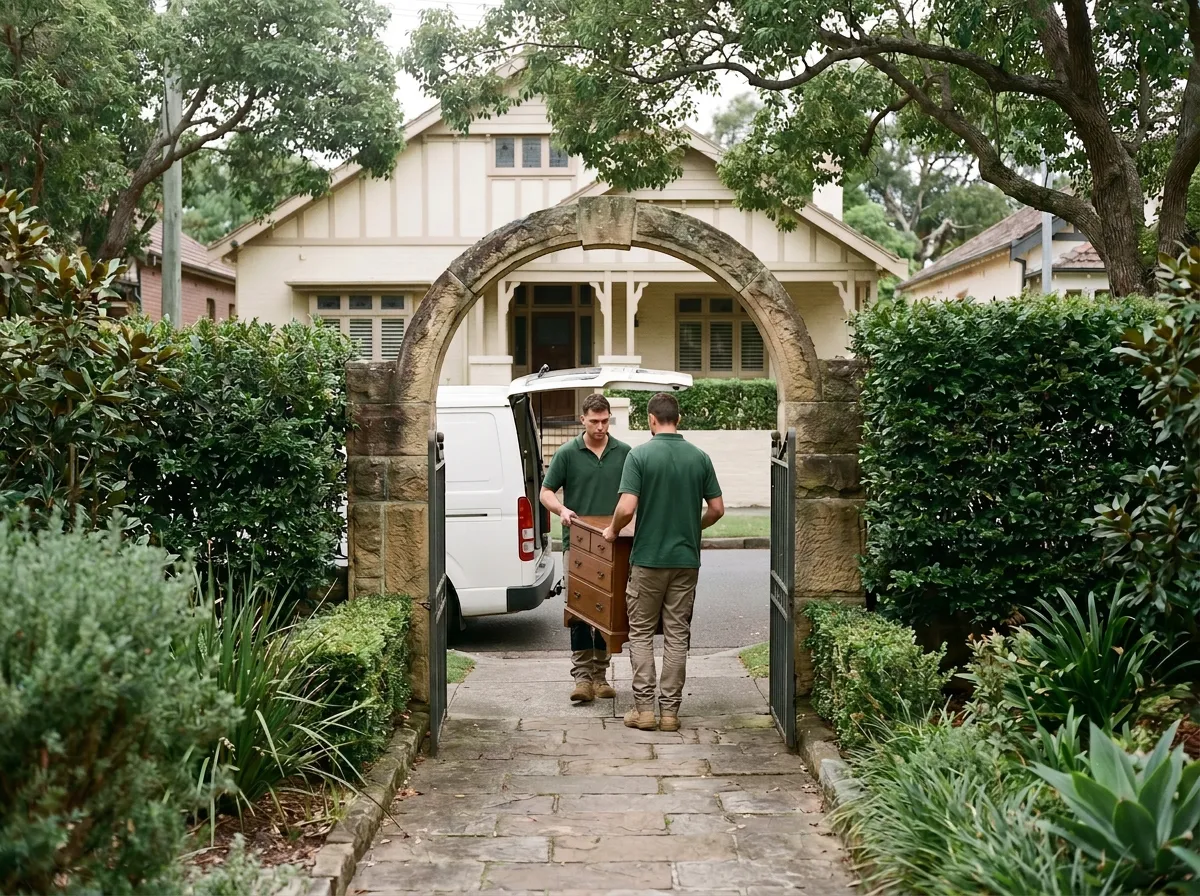
- The calendar. Cleanup dates are set, and settlements, listings and moving days are not. When something has to be gone this week, we come on a day you choose.
- The volume. Five cubic metres is a fair pile. A decades-full Balmoral house is many times that, and a clearance done by cleanup instalments would take years. We take the lot in one arranged job.
- The carry. The council collects from the kerb in front of your property; getting everything there is yours to do, and on the slopes above the beach that means stair flights. We carry from inside the house, stairs included, already counted in the one figure you agreed to.
- The refused list. Hot water units, green waste by the trailer-load, the gassed fridge nobody wants to degas, renovation offcuts: most of what the cleanup refuses is our ordinary work. The genuinely hazardous things, asbestos, chemicals, clinical waste, we steer to licensed specialists rather than pretend.
- The street display. A cleanup pile stands in front of the house overnight, in public view and open to picking-over. For a dead fridge that is nothing. For the contents of a parent's house it is the wrong register entirely. We load straight from the rooms to the van, keepsakes set aside first, with nothing on the kerb at all.
- Where it ends up. The council says it plainly on its own page: non-metal items collected at cleanups go to landfill. Our order runs donation first, then recycling and licensed facilities, with landfill last. Where things go sets that out stream by stream.
Asked often, about the cleanup
The council truck left half our pile behind. Can you take the rest?
Yes, and it is one of the most normal calls we get. Whether it was over the limit, off the accepted list or simply too much, tell us what is still sitting there and one fixed price has it gone, usually within a day or two of talking.
Can we put a deceased estate out for the council cleanup?
You can put out whatever fits the rules, and it costs nothing. Our honest caution is about everything else: the volume of a full house is many collections' worth, the pile stands in the street in front of a home the neighbours knew, and nothing at the kerb has been checked for the letters and photographs that hide in sideboards and shoeboxes. If the whole house has to be emptied, an estate clearance is the tool built for it. Some families sensibly do both: we clear the house, and a last box of ordinary oddments waits for the council date.
When is our next cleanup date?
The council sets the dates per property, so check the household clean up page or ring the council's Waste Line on 9978 4076. We keep no better calendar than they do.
Do you take the things the council will not, like green waste or e-waste?
Green waste, happily, by the armful or the trailer-load. E-waste we take as part of a bigger load, and it goes to a licensed facility. If e-waste is all you have, the council's drop-off days are the cheaper answer, and we would use them ourselves.
Will you just carry things to the kerb for our cleanup?
Ask us. If the cleanup will take what you have and the date works, we will say so, plainly, even when it means no job for us. And where the useful thing is a pair of careful crews on a stair, we would rather quote you the small job honestly than talk you into a bigger one.
More guides: where things go, clearing a house you can't attend, and how a clearance works, page by page.
Whenever you are ready
Tell us a little about the house, the move or the pickup. We will come back to you promptly, arrange a time to look, and agree the price before anything is lifted.