
Home›Guides›Clearing a house you can't attend
Clearing a Balmoral or Mosman house you can't attend
Distance changes the medium, not the care.You are the executor, or the daughter, or the brother who ended up holding it, and you are in Brisbane or Perth or London while the house is here above the beach. This guide is for you. It sets out exactly how a whole clearance runs when nobody from the family can be in the hallway, because most of the estates we clear run precisely that way.
Every in-person moment has a from-away equivalent
Nothing in a house clearance actually requires you standing in the hallway. Each moment where you would normally be present has a remote form that works just as well, and this table is the whole guide in miniature.
| The moment | If you were here | From where you are |
|---|---|---|
| The first look | You walk the rooms with us. | We walk them for you on a video call, slowly, pointing the phone wherever you ask. |
| The price | Agreed across the kitchen table. | Sent to you in writing. Same fixed price, same rule: settled before the work starts. |
| The set-aside | You point out what matters. | You tell us on the call, add to the list any time after, and we ring before deciding anything we are unsure of. |
| The clearing day | You could watch, or make the tea. | You get on with your day. The phone only rings if something genuinely needs you. |
| The handover | Keys in your hand, boxes by the door. | Photos of every swept room the same day. The keys and the boxes travel the route you chose. |
We walk the house for you, at your pace
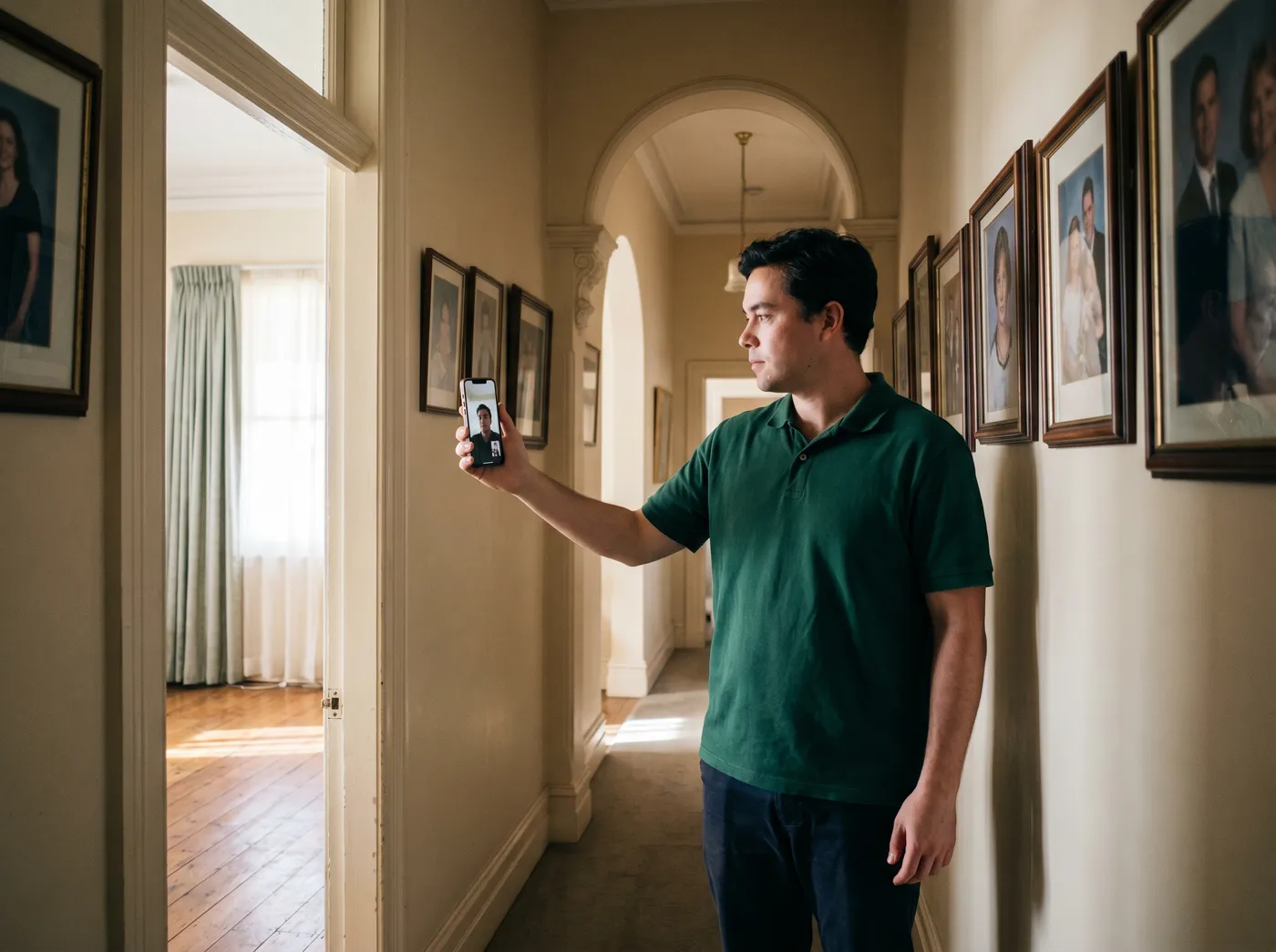
The first step is the same as it always is: someone walks the house, room by room. When you cannot be here, the walk happens on a video call. We arrange access through whoever holds a key, usually the agent, the solicitor or a neighbour, and we set the call for an hour that suits your timezone. Evening in London is a good Sydney morning; it works better than people expect.
On the call, we go slowly. You tell us where to point the phone: inside the sideboard, the top of the wardrobe, the tin on the second shelf. We open drawers on camera. If you need to stop and think, we stand still. If another family member should see a room, we walk it again on a second call without any fuss.
Nothing is decided on the call and nothing is moved: the look comes first, the start comes later, in writing. Afterwards you get the fixed price for the whole job, and it holds no matter what the under-house turns out to be keeping.
Every decision lives in writing
When a family is spread across three cities, memory is not a filing system. So nothing about your clearance is carried in anyone's head. What you have in writing, the whole family has in writing:
- The fixed price, covering the crew, the carry, the vehicle and the tip fees, settled before the work begins.
- The set-aside list, started on the walk-through and open until clearing day. Your sister remembers the medals on Tuesday; they go on the list on Tuesday.
- Every question we asked and the answer you gave, so a decision made in a Tuesday phone call is not a mystery by Friday.
- Where the keys and the boxes went, by name, at the end.
If we are unsure whether something matters, we stop and call you before it is decided. That rule has no exceptions, and it is the whole reason a family can be in another hemisphere while their mother's house is cleared.
How the keepsakes and the keys travel
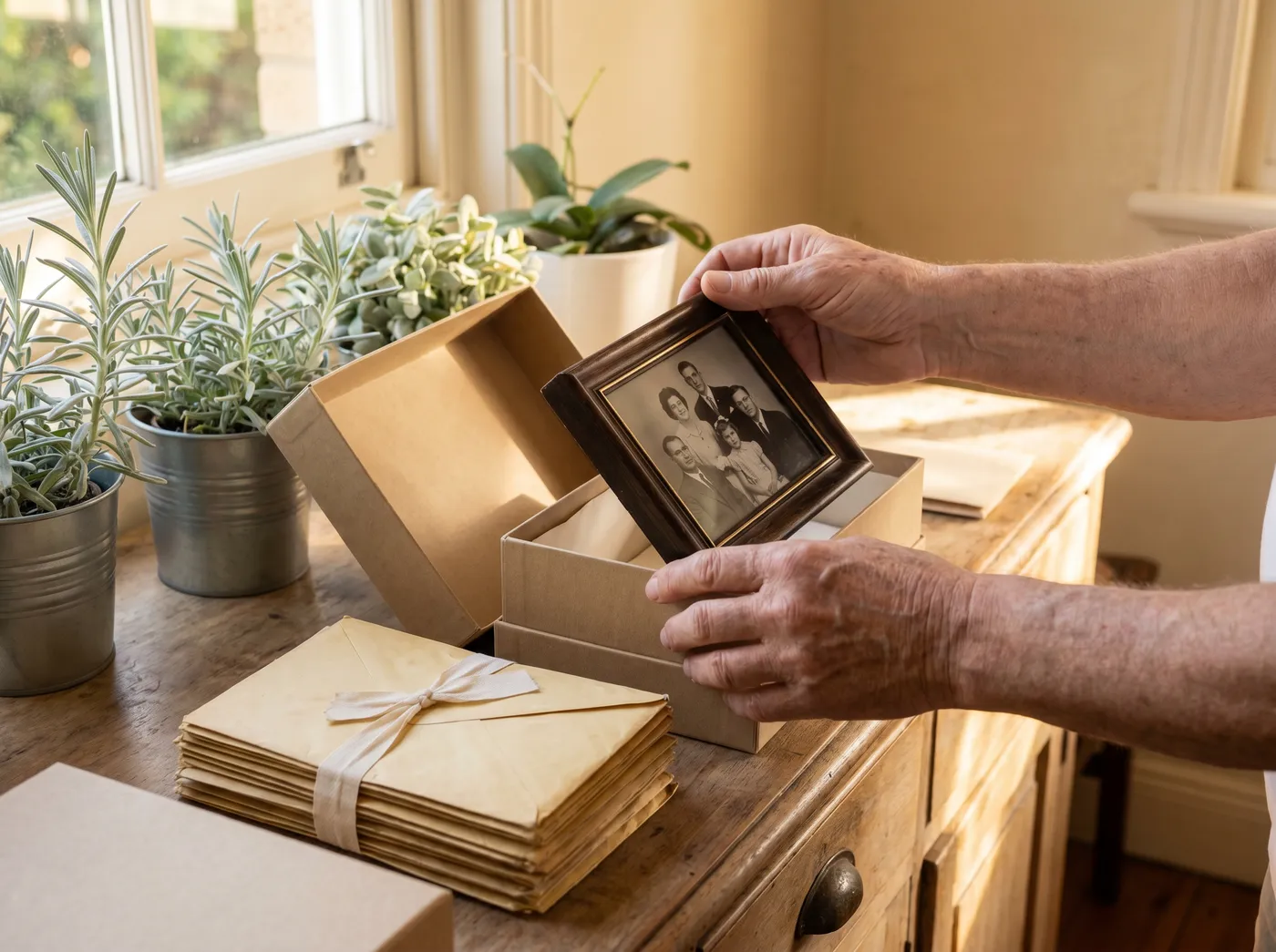
The set-aside boxes are packed and labelled at the start of clearing day, before anything else leaves the house, and they never ride with the rubbish. Then they travel one of three ways, and you choose which on the walk-through call. Whichever route you pick, it is written down, and you are told the moment it happens.
The keys follow the same discipline. At the end of the job they go back to a named person: you by post if you want them, the agent for the sale, the solicitor for the estate file. Never under the mat, never in a drawer, and the written record says whose hand they went to.
Couriered to you
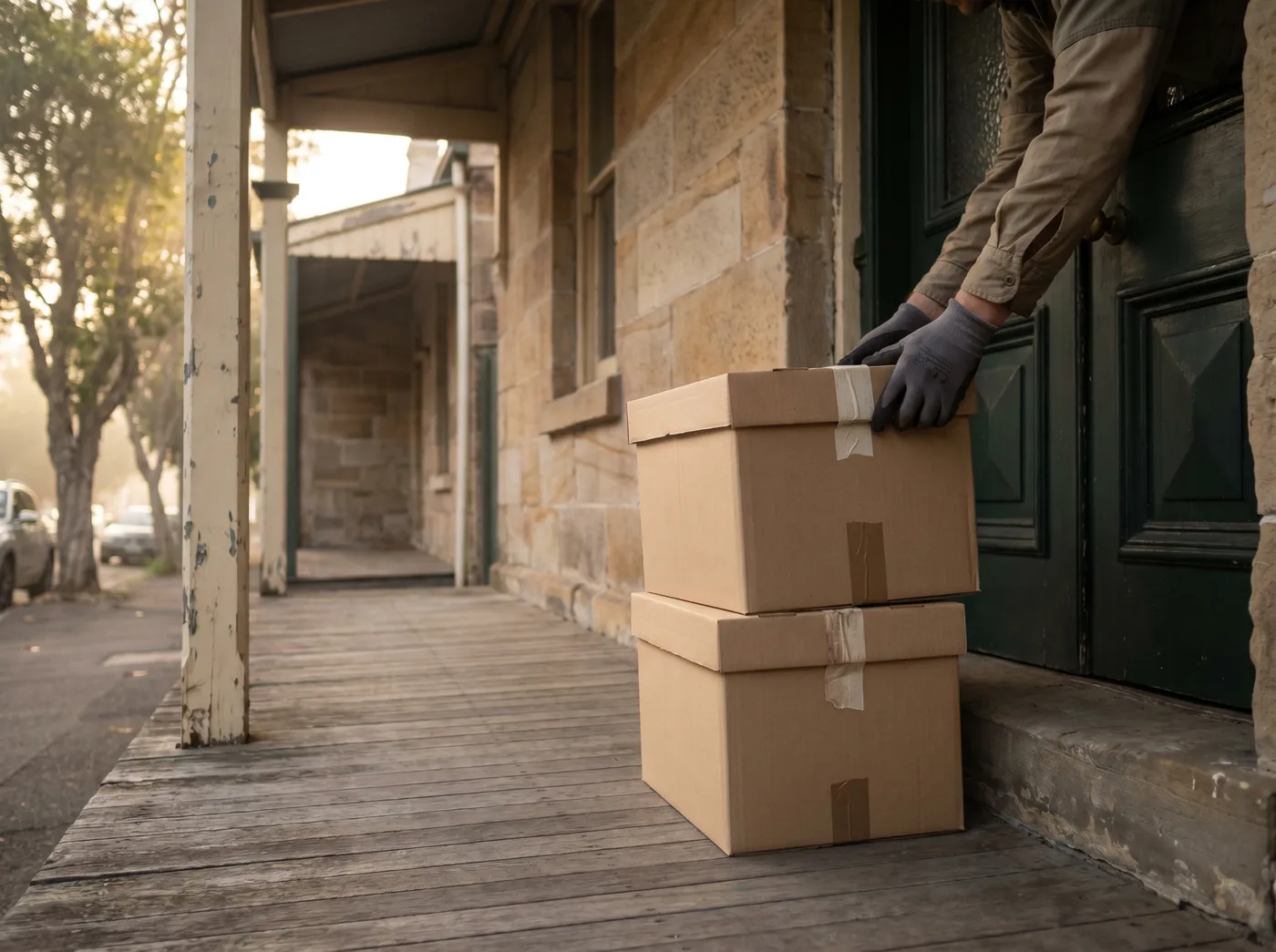
The boxes go to your door interstate or overseas by tracked courier, and the tracking details go to you the day they are sent. Most families with a few boxes of photographs and papers choose this.
Held for collection
We hold the boxes safely until you are next in Sydney. Plenty of families fly in weeks later for the settlement or the memorial and collect everything in one calm visit.
With your solicitor or agent
The boxes are delivered to the office handling the estate or the sale, signed for, and kept with the keys and the paperwork. Tidy when everything else about the estate already lives there.
What actually arrives in your inbox
From another city, a clearance is a short series of things arriving, each one expected. This is the whole of it, in order.
-
i.
After the walk-through call
The price for the whole job, put in writing, with the set-aside list as it stands. Share it with the family; nothing is booked until you say so.
-
ii.
Before the day
The date confirmed, the access arranged with whoever holds the key, and the final set-aside list read back to you.
-
iii.
During the clearance
Quiet, mostly. The phone rings only if we find something we are unsure about, and it is not decided until we have spoken.
-
iv.
The same day we finish
Photographs of every room, swept, and word of exactly where the keys went, by name. You see the empty house the day it becomes one.
-
v.
Afterwards
The courier tracking for the keepsake boxes, or confirmation of where they are held or lodged. The estate has what it needs for its file.
You will not have been here, and nothing will have been lost.
Where remote clearances go wrong, when they do
Clearing a house from another city is not risky in itself. It is risky with the wrong arrangement, and the failures all have the same shape: something happened that nobody away from the house could see.
- An hourly rate with nobody watching the clock. The meter runs, the day stretches, and the first you hear of it is the invoice. A fixed price agreed in writing before the work starts cannot do this to you, which is why it is the only way we quote.
- Speed without a set-aside. A crew paid to empty a house quickly will empty it quickly, drawers and all. Once the truck leaves, no apology retrieves a war medal. The set-aside happens first here, ahead of any load, and the unsure things wait for a phone call.
- Nothing in writing. Three siblings, three phone summaries, three versions of what was agreed. Every decision on our jobs lives in one written record the whole family can read, which is duller than a phone call and far kinder to families.
None of this needs managing from your side. It is simply how the job is built, and the page-by-page walkthrough shows the same process from the house's end.
Asked often, from far away
Who lets you into the house?
Whoever you nominate: the agent handling the sale, the solicitor holding the estate, a neighbour with a key. We arrange the access directly with them before the day, and the keys go back to a named person at the end, recorded in writing. Nothing is left under a mat.
Do I need to fly back at all?
No. Many of the families we work for never attend, start to finish. If you want to walk the house yourself one last time before it is cleared, that matters, and we will simply schedule around your trip. Both are normal.
We are several siblings in different cities. Who do you deal with?
One nominated voice, usually the executor, so instructions never contradict each other. Because everything lives in writing, the rest of the family reads the same set-aside list and the same price you do, and anyone can add to the list through that one person before the day.
What if you find cash, jewellery or documents nobody knew about?
They go straight into the set-aside, we call you, and they are added to the written list. Long-held houses surprise their families more often than you would think: papers behind the linen, a ring in a coat pocket. Finding those things is a large part of why we work drawer by drawer instead of by the armload.
How do the timezones work for the call?
We set the walk-through for an hour that is civilised where you are. Sydney mornings suit evenings in London and afternoons in Auckland; interstate is easier still. The call takes as long as the house needs, and a second call costs nothing but arranging it.
How long does the whole thing take from a distance?
The clearing itself is usually days, not weeks. The calendar around it, probate, family decisions, settlement, is yours, and we fit to it. Some families want the house cleared this month; some need us to wait for months and then move quickly before settlement. Distance changes none of that. And if you are wondering what becomes of everything that is not kept, where things go follows every stream.
Start with a call you can take from anywhere
Tell us a little about the house, and where in the world you are. We will suggest some times for a video walk-through that suit your timezone, and the price will be in writing before any work begins.
The form is how to reach us while the phone line is set up. Leave your number and the country you are in, and we will call you back at a sensible hour.